Recently, I spoke with a friend — a former client — who had just resigned from a role she held for 20 years. She shared how hard it had been to step away, and I understood immediately, because I’ve felt that same way.
It reminded me of something my husband’s favorite character, Lt. Cmdr. Data in Star Trek, once said:
I never knew what a friend was until I met Geordi. He spoke to me as though I were human. He treated me no differently from anyone else. He accepted me for what I am. And that, I have learned, is friendship. But I do not know how to say goodbye. – Lt. Cmdr. Data
We build friendships and relationships through work. When those relationships and rhythms end, we grieve — not just the work itself, but the people and purpose tied to it.
Grief isn’t just for the loss of loved ones. It can show up in transitions — when we leave people, work, or rhythms we’ve held close. And if we don’t acknowledge it, depression and exhaustion can quietly take root.
Grief shows up in ways we don’t always expect. And as Dr. Henry Cloud reminds us in Necessary Endings: “Getting to the next level always requires ending something, leaving it behind, and moving on.”
That reminder is powerful — endings aren’t failures, they’re often the doorway to growth. The real challenge is finding balance in necessary endings so that grief, leadership, and development can co-exist.
Why Letting Go Feels Like Loss
Grief is a natural response to change. Psychologists describe it as the cost of losing something meaningful, whether it’s a role, a relationship, or a season of life. Leaders and entrepreneurs often underestimate this truth, pushing through transitions without pausing to acknowledge what’s been lost.
When I’ve stepped away from long-term client relationships, the grief felt heavier than I expected. It wasn’t just about the work — it was about identity, rhythm, and connection. For many of us, letting go of what we’ve built feels like letting go of a piece of ourselves.
Recognizing this grief is the first step toward balance. Only by naming it can we move forward with clarity.
The Tension: What Feels Good vs. What’s Good
Like many women and leaders I coach, I struggle with the desire to please others. Doing what feels good in the moment can keep others happy, but it usually leaves me drained — mentally and physically.
In 2024, I learned this lesson the hard way. I had pushed myself to the breaking point with a client. The more I did, the more the client needed me to do. No matter how hard I tried, I couldn’t get ahead. And while I was pouring out everything at work, I was losing patience at home. I couldn’t unwind. The stress was shutting me down — physically and mentally.
That was my necessary ending.
I realized I couldn’t keep living in “what feels good for others” at the expense of “what’s good for me.” And I’ve learned that leaders often face this same tension. People-pleasing may keep the peace for a season, but it erodes resilience over the long term.
Finding Balance in Necessary Endings: A Pathway to Growth
Here’s the paradox: endings often feel like failure in the moment, but they are frequently leadership’s most courageous act.
Leaders cling to toxic clients, broken systems, or exhausting rhythms because change feels uncertain. Yet, finding balance in necessary endings is what creates space for new opportunities.
I’ve seen this in my own life: stepping away from work that drained me gave me freedom to focus on coaching, writing, and serving leaders in a more aligned way. What looked like a loss at first became the foundation for a new season of growth.
Dr. Cloud reminds us that pruning — cutting away what no longer serves us — is a leadership discipline. Without it, we become entangled in what’s dead or unfruitful, unable to focus energy where it matters most.
The Ah-ha: Slowing Down Isn’t Falling Behind
That ending wasn’t easy. At first, it felt like failure. But in time, I saw it for what it truly was: a turning point. Choosing to step away gave me space to breathe again. It gave me clarity.
And that’s when the ah-ha settled in: balance comes when we choose what’s good, even if it doesn’t always feel good. Sometimes the bravest leadership decision we can make is to stop — to say no, to let go, to end what is draining us — so we can say yes to health, clarity, and presence.
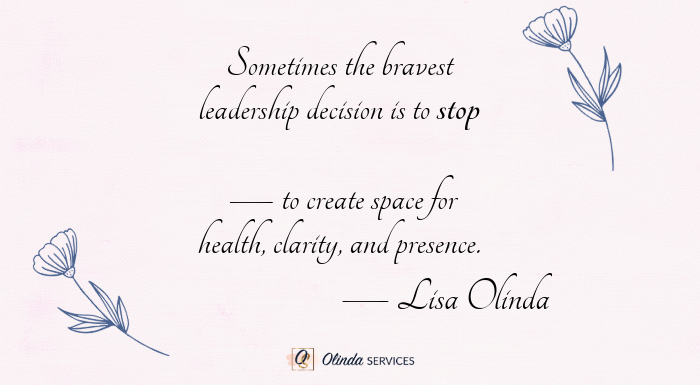
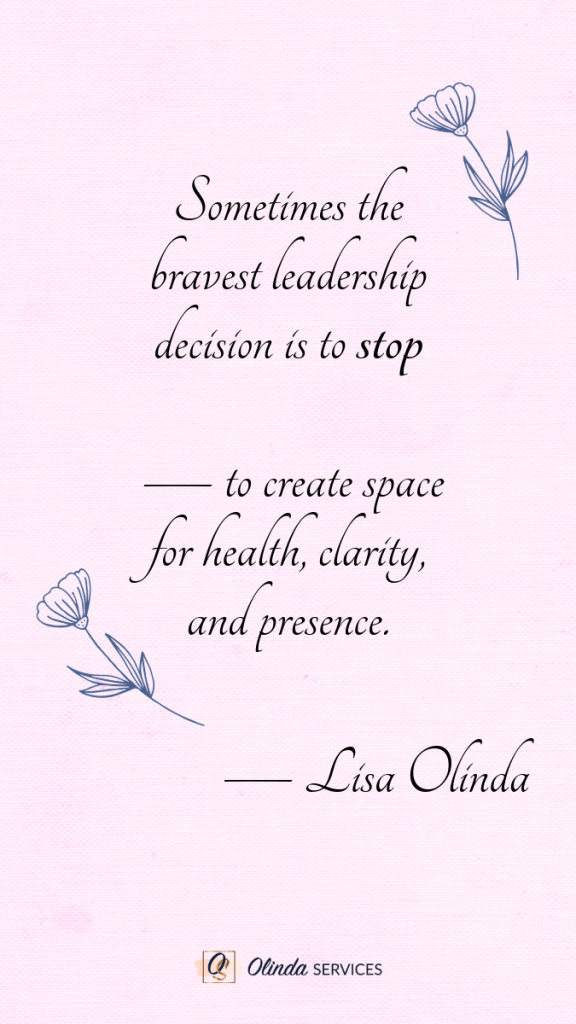
“Sometimes the bravest leadership decision is to stop — to create space for health, clarity, and presence.” — Lisa Olinda
Slowing down doesn’t mean falling behind. It means moving ahead with purpose and perspective.
Three Practices for Finding Balance in Necessary Endings
If endings are essential, how do we step into them with balance instead of burnout? Here are three practices that have helped my clients and me:
- Pause & Evaluate – Ask yourself, “What is life-giving?” and “What is draining?” Awareness is the first step toward change.
- Set Boundaries with Grace – Endings don’t have to be harsh. Try a script: “This season has been meaningful, but I need to make space for what’s ahead. Thank you for understanding.”
- Replace Fear with Vision – Every ending makes space for something new. Focus on what you’re making room for — more clarity, presence, or a healthier team.
When we practice these steps consistently, necessary endings become less about loss and more about leadership strength.
An Invitation to Reflect
If you’ve ever felt grief in transition — leaving a job, stepping away from a client, or even letting go of a season — you’re not alone. Grief is part of growth.
Pause long enough to notice where you might be choosing “feels good” over “is good,” and permit yourself to take the harder, healthier step.
Endings don’t mean the story is over — they often mark the beginning of a new chapter. Finding balance in necessary endings allows us to lead with clarity, live with presence, and embrace growth without losing ourselves in the process.
Related Reading on Balance and Leadership
- Overcoming Learned Helplessness: Reclaiming Your Agency
- Balance: Career, Home, and Everything in Between
- How to Succeed at Work, at Home, and in Life
Final Thought
Endings can feel heavy, but they often carry the seeds of new beginnings. When we embrace necessary endings, we make space for clarity, resilience, and sustainable success.
As Dr. Henry Cloud reminds us, endings aren’t failures. They are often the doorway to growth. By finding balance in necessary endings, we step into clarity, presence, and sustainable success.
👉 Want more reflections like this? Subscribe to the Aligned Newsletter for twice-monthly insights straight to your inbox.